
Fafrees Mountain Electric Bike
A mid-range electric bike with a 250W motor, a 468Wh battery and 26-inch wheels.
Electric bike speed is one of the most common questions, and UK law sets a clear limit. This guide explains how fast road-legal e-bikes go, why, and what happens beyond the limit.
A road-legal UK e-bike (an EAPC) provides motor assistance only up to 15.5mph (25km/h). Past that, the motor stops helping, though you can keep pedalling faster under your own power. This limit is what keeps an e-bike classed as a bicycle, needing no licence, tax or insurance. Bikes that motor faster are legally mopeds or motorcycles.
By law, an EAPC's motor must cut assistance at 15.5mph. You will still feel full help up to that speed, which flattens hills and headwinds, then the motor eases off and you pedal as on a normal bike. Many riders comfortably cruise at the limit on the flat, making commutes faster and far less effort than an ordinary bicycle.
Yes - you can pedal beyond 15.5mph under your own leg power; the law only limits the motor's assistance, not your speed. Going downhill or pedalling hard, you can exceed it freely. What is not allowed is the motor driving you faster than 15.5mph, which is where some imported or modified bikes fall outside the law.
An EAPC may have a throttle that assists only up to about 4mph (6km/h) without pedalling, as a walk- or start-assist. A throttle that powers the bike faster without pedalling takes it outside the EAPC rules, making it a moped or motorcycle in law that needs registration, tax, insurance and a licence. This is a common way bikes become road-illegal.
Bikes advertised with higher speeds (like 20mph or 28mph on motor power) or unrestricted throttles are not road-legal EAPCs in the UK. To use one on public roads it would need type approval, registration, tax, insurance, a licence and a motorcycle helmet, and it could not use cycle paths. Many are only legal on private land with permission.
| # | Model | Motor | Battery | Wheels | Brakes | Folding |
|---|---|---|---|---|---|---|
| 1 | Fafrees Mountain Electric Bike | 250W | 468Wh | 26" | - | No |
| 2 | Finbike EB1S | - | 432Wh | 14" | - | No |
| 3 | Touroll U1 | - | 468Wh | 26" | mechanical | No |
| 4 | Hitway BK6SL Folding Electric Bike | 250W | 562Wh | 20" | - | Yes |
Specs from each manufacturer's Amazon UK listing, checked 2026-11-09.
A mid-range electric bike with a 250W motor, a 468Wh battery and 26-inch wheels.
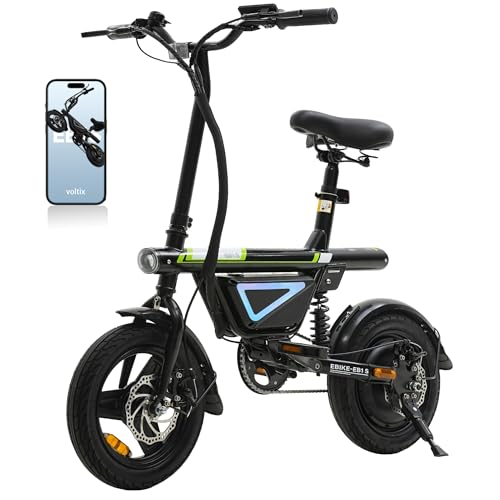
A budget electric bike with a 432Wh battery and 14-inch wheels.

A budget electric bike with a 468Wh battery and 26-inch wheels.

A premium folding electric bike with a 250W motor, a 562Wh battery and 20-inch wheels.
A road-legal e-bike (EAPC) assists only up to 15.5mph (25km/h); past that the motor stops helping but you can pedal faster yourself. This keeps it classed as a bicycle, needing no licence, tax or insurance.
You can pedal beyond 15.5mph under your own power - the law only limits the motor's assistance. What is not allowed is the motor driving you faster than that, which makes the bike a moped or motorcycle in law.
Not as EAPCs. Bikes that motor faster than 15.5mph need type approval, registration, tax, insurance and a licence, and cannot use cycle paths. Many are only legal on private land with permission.
Our top pick is the Fafrees Mountain Electric Bike (our score 9.6/10) - a mid-range electric bike with a 250W motor, a 468Wh battery and 26-inch wheels.